
Papers by: Federico Berti, Marcantonio Massimo, Gianni Papi, Gianluca Poldi, Rossella Vodret
Edited by: Federico Berti
- Cracovia 2026
- 194×250 mm, hardback
- 96 pages, 39 illustrations
- ISBN 978-83-89831-48-4
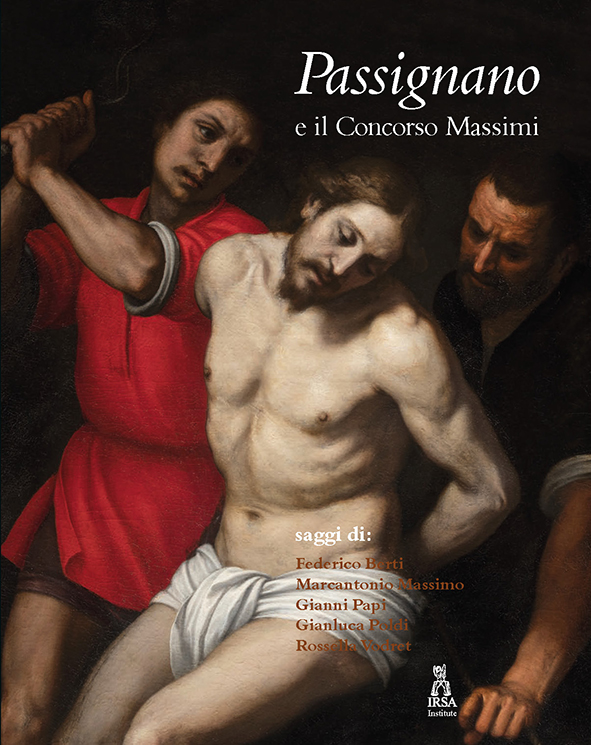
This volume brings together five essays devoted to the recently rediscovered ‘Flagellation of Christ’ by Passignano, and revisits the issue of the ‘Massimi commission’. The studies offer new interpretations and seek to clarify the debate surrounding the various commissions of Massimi from Passignano, Cigoli and Caravaggio. The works of the three artists and the archival data are analysed from various angles, offering fresh perspectives.
The essay by Federico Berti, the first to study and publish the ‘Flagellation of Passignano’, which forms the centrepiece of this publication, places the work within the broader context of the painter’s output, reconstructing the possible commission of the painting by the Massimi family.
In his contribution, Marcantonio Massimi suggests – based on documents preserved in the family archive – the hypothesis of two distinct commissions by the Massimi family, involving Passignano, Caravaggio and Cigoli, at the invitation of two different members of the family. The author recalls two patrons and art collectors who lived during the same period: Massimo Massimi (1576–1644) and Innocenzo Massimi (1581–1633), papal nuncio to Spain and later bishop of Catania, who was also an art enthusiast. The author does not rule out the possibility that Caravaggio may have painted two versions of the Ecce Homo: one for the clergyman Innocenzo (‘Monsignor’ in the documents), and another for Massimo Massimi (‘illustrious gentleman’, according to Cigoli’s biography).
Gianni Papi examines the theme of the ‘Flagellations’ of Passignano and relates them to Caravaggio’s ‘Ecce Homo’ and ‘Crowning with Thorns’, and to Cigoli’s ‘Ecce Homo’. By analysing the dimensions of the paintings and reconsidering their dates of execution, the author raises doubts about the actual existence of the competition itself. Papi therefore remains sceptical regarding the sequence of events and the actual presence of the works in question in the rooms of Palazzo Massimo, circumstances which, in his view, remain largely hypothetical at present, albeit possible.
Rossella Vodret, summarising the results of her research into the various versions of the ‘Ecce Homo’, seeks to clarify the chronology of Caravaggio’s paintings and the possible role of Cigoli and Passignano in the commissions of the Massimi family.
Finally, Gianluca Poldi presents the results of the non-invasive technical examinations carried out on Passignano’s painting, highlighting in particular the findings of infrared reflectography and comparing them with those obtained from other works by the artist.
CONTENTS
Prefazione
Józef Grabski
Il concorso Massimi e Passignano: un dibattito aperto
Il dipinto di Passignano
Federico Berti
Ancora sulla Flagellazione di Cristo di Domenico Passignano
Il concorso Massimi. Ipotesi e proposte
Marcantonio Massimo
Innocenzo Massimo e il suo concorso
Gianni Papi
Sulle commissioni di Massimo Massimi a Caravaggio, a Cigoli, e forse a Passignano
Rossella Vodret
La vicenda del concorso Massimo e la datazione dell’Ecce Homo di Caravaggio
Il dipinto di Passignano. La tecnica
Gianluca Poldi
Cavare dal buio, il vento della rivoluzione nel pennello del Passignano. Analisi tecniche sulla Flagellazione
Bibliografia
Orders can be placed via email irsa@irsa.com.pl.