|
|||
|
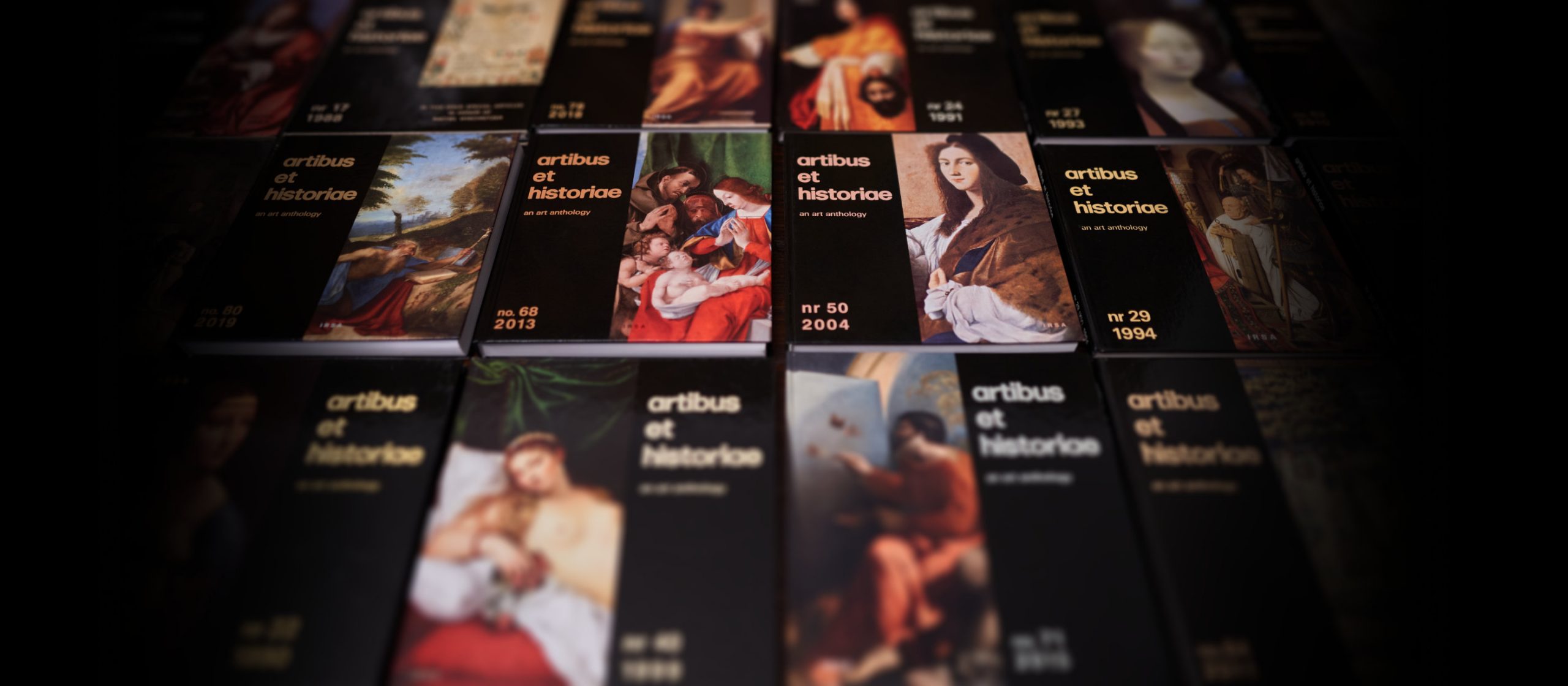
IRSA IRSA Institute for Art Historical Research was established in 1979, IRSA being the acronym of Istituto per le Ricerche di Storia dell'Arte, as the Institute was initially based in Venice (1979-1982). From there it moved to Florence and Vienna, and finally in 1996 to Cracow (Poland). IRSA has maintained contacts over many years with the Japanese art history milieu, including specialists in Oriental and European Art, and, in cooperatiom with Professor Hidemichi Tanaka, opened a branch of IRSA at the University of Sendai. The idea of starting a new art periodical and a research institute as its subsidiary, originated with Dr Józef Grabski at the end of the 1970s. His initiative was carried to fruition by a group of art historians gathered after the International Congress of the History of Art (CIHA) in Bologna in 1979 and IRSA as a research Institute and as a publisher (IRSA Publishing House) came into being. That same year (but dated already 1980) the first issue of ARTIBUS ET HISTORIAE, appeared. Józef Grabski, then a young art historian, student of Professor Jan Białostocki of Warsaw University and then research student at Vienna University and the Fondazione Roberto Longhi in Florence, managed to enlist for the new Institute and its periodical the cooperation of art historians of international repute including André Chastel, Giuliano Briganti, René Huyghe, Carlo del Bravo, Everett Fahy, Hermann Fillitz and Konrad Oberhuber, and from Poland, Professors Adam Labuda, Juliusz Chrościcki and Andrzej Rottermund together with Jan Białostocki. Within the framework of the current activities of IRSA, Dr Grabski organizes exhibitions in different countries of the world. They are accompanied by well-researched and richly illustrated catalogues, published by the IRSA Publishing House. IRSA Art Consulting is a separate branch of the Institute which gives advice on dealing in Polish and foreign art, both 'old masters' and contemporary artists. Drawing on Dr Grabski's extensive experience in this field, IRSA acts as consultant and helps clients to build up their collections. In existence for thirty years, IRSA has achieved considerable success through carrying out art historical research and organizing various exhibitions. Among the most notable exhibitions have been: Opus Sacrum, shown at both the Royal Castle in Warsaw (1990) and in Vaduz, Liechtenstein, and a show at the Royal Castle of Wawel (1991) of the earliest work of Jan Vermeer van Delft, Saint Praxedes, discovered as a result of research carried out by the IRSA Institute; the Wojciech Fibak collection featuring paintings of the École de Paris in Cracow (1998) and Łodz (1999); and the retrospective show of Stasys Eidrigevičius STASYS 50 in Cracow (1999) and Wrocław (2000); an exhibition of Leon Tarasewicz's works entitled Leon exhibition in Milan, Leon Tarasewicz meets Michele De Lucch, Milano 2003, which IRSA co-organized in the Rubin Gallery in Milan. Most recently, IRSA has presented the works of Iwo Zaniewski, New Harmony Paintings, in Today Art Museum, Beijing (2008), and The Beauty of Gentleness. New Harmony Paintings by Iwo Zaniewski at the Wisom Art Center, Shanghai (2008). Because of the Polish background of the owners of IRSA, one of the initial aims of the Institute was to 'insert' Polish art into the 'international mainstream' and it continues to promote Polish art through its various curatorial and scholarly activities. Shortly after the fall of the Iron Curtain, IRSA organized an exhibition of works by six distinguished Polish artists at the Hammer Galleries in New York (1991). The exhibition entitled, Opening Up helped present contemporary Polish art as possessing unique styles of artistic expression regardless of historical traumas. At the same time. IRSA prepared a monograph on Leonardo da Vinci’s Lady with the Ermine, lent from the Czartoryski Museum in Cracow to be included in the monumental exhibition, Circa 1492. Art in the Age of Exploration held at the National Gallery of Art in Washington (1991-1992). The monograph illuminated the meaning and history behind Leonardo’s masterpiece and was published with the aim familiarizing a foreign audiences with a work rarely seen outside of Poland. IRSA's emblem, our 'logo', is of a cherub standing on a pair of scales, which it simultaneously holds in its hands. It is derived from a Renaissance painting of Lorenzo Lotto entitled Portrait of a Man of Thirty-Seven (c. 1542, oil on canvas, 95 × 80cm, Galeria Doria-Pamphilj, Rome) and symbolizes the Platonic idea of the internal balance between the spiritual and material elements in the life and activity of man. |
||